
Introduction
More than 60% of online interactions now start on a phone screen. For many customers, a mobile app is the first and most frequent touchpoint with a brand. When that experience feels slow, confusing, or unsafe, trust drops quickly and growth follows. Well-planned, professional mobile app development services have become a core part of how companies serve and retain customers.
Teams feel real pressure: choosing a tech stack, weighing native vs cross‑platform, protecting data, hitting deadlines, and staying within budget. Some hire separate vendors for strategy, design, development, and testing, only to end up with gaps and hard‑to‑maintain products. NevoraDev was built to solve that problem with full‑cycle app delivery, from first idea to long‑term optimization. This guide explains how modern app projects run, which approaches fit different goals, what the lifecycle looks like, how costs work, and how to pick a partner who can ship a stable, secure product.
“Design is not just what it looks like and feels like. Design is how it works.” — Steve Jobs
Key Takeaways
-
Mobile app development services cover far more than coding. Strategy, discovery, UX and UI design, engineering, QA, deployment, and maintenance all matter. Having one team own this lifecycle reduces handoff risk and keeps business and technical goals aligned.
-
The development approach directly affects cost, performance, and release speed. Native apps bring top performance and deep OS integration, while cross‑platform and hybrid options can reduce budget and time. A good partner links this decision to clear business outcomes instead of guesswork.
-
A structured Agile process breaks complex projects into manageable steps. Regular discovery, design, architecture, iterative development, and QA sprints give stakeholders working software every few weeks so they can adjust priorities early.
-
Security, scalability, and industry regulations must be baked in from the start. Post‑launch monitoring, analytics, and planned updates keep the app healthy and delivering returns over time.
What Are Mobile App Development Services?
Mobile app development services cover everything needed to turn an idea into a live app that people trust and enjoy using. It starts with understanding the business model, market, and users, then shaping a product that fits those needs in a practical way. Done well, this process converts a raw idea into a stable, scalable product.
Typical full‑cycle work includes:
-
Consulting and discovery
-
Market and product research
-
UX and UI design
-
Backend and frontend development
-
Testing, launch, and app store submission
-
Maintenance, support, and new feature releases
Many companies try to split this work among several vendors. One designs, another builds, a third tests, while internal teams handle hosting. This often leads to mismatched expectations, fragile integrations, and slow fixes. At NevoraDev, we keep one accountable team across the lifecycle and align every technical decision with business goals, user needs, SEO, and security.
Core Mobile App Development Services We Provide
At NevoraDev, mobile app development services are delivered as one connected line from idea to measurable impact. Skipping stages tends to show up later as extra cost or lower quality, so we keep each part covered.
Key service areas include:
-
Mobile App Consulting & Discovery – Clarifying the concept, choosing platforms (iOS, Android, web), comparing native vs cross‑platform options, and setting realistic scope, budget, and timelines.
-
Product & Market Analysis – Researching target users, studying competitor apps, and defining a clear value proposition that guides features and UX.
-
UI & UX Design – Creating user flows, wireframes, and high‑fidelity mockups that match your brand and make onboarding, navigation, and key tasks simple.
-
Full‑Stack Development – Building native or cross‑platform mobile apps plus any required web portals or admin dashboards, along with backend APIs, business logic, and databases.
-
API & System Integration – Connecting to payment providers, mapping tools, analytics, CRM and ERP platforms, and legacy systems with secure, documented APIs.
-
Quality Assurance & Testing – Running functional, performance, security, and accessibility tests across many devices and OS versions in parallel with development.
-
Launch, Support & Modernization – Handling app store submissions, monitoring behaviour after release, applying OS and security updates, and modernizing older apps to current standards.
Across all of this, NevoraDev uses short Agile sprints and steady communication to keep progress visible.
Choosing the Right Mobile Development Approach
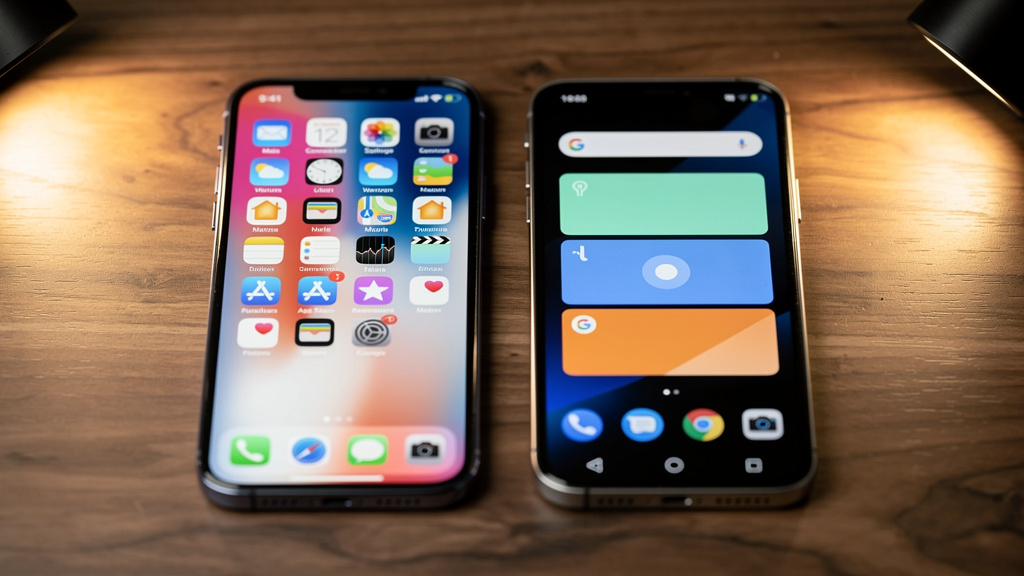
How an app is built has a huge impact on user experience, maintenance cost, and time to market. When we scope mobile app development services, we match the approach to real goals, not to a favorite framework.
-
Native Development (Swift, Kotlin)
Separate iOS and Android apps with maximum performance, full hardware access, and platform‑specific interfaces. Best for graphics‑heavy, security‑sensitive, or high‑traffic products. Requires more effort because there are two codebases. -
Cross‑Platform Development (React Native, Flutter)
One shared codebase for both platforms, often cutting development cost and timeline by a significant margin. Performance is close to native for most use cases, with native modules used when needed. -
Hybrid Apps
Web technologies wrapped in a native shell. Useful for content‑heavy or simple MVPs where budget is tight. May feel less responsive and can be limited with some hardware features. -
Progressive Web Apps (PWAs)
Browser‑based experiences that behave like apps, with offline support and push notifications in many cases. Helpful when store distribution is a barrier or the product is mainly information‑driven.
NevoraDev reviews your budget, deadlines, traffic expectations, and integration needs, then recommends the approach that fits best.
The Mobile App Development Lifecycle: Our Process

A clear lifecycle turns a large project into predictable steps. NevoraDev follows a structured, Agile process for mobile app development services:
-
Discovery & Requirements – Workshops to clarify business goals, user needs, success metrics, and constraints. Output: roadmap, MVP scope, and initial estimates.
-
UX/UI Design & Prototyping – Personas, user flows, information architecture, wireframes, and clickable prototypes to validate flows before coding.
-
Technical Architecture & Planning – Defining backend and API architecture, security measures, database models, and DevOps pipelines. Output: detailed technical blueprint and sprint plan.
-
Agile Development – Short sprints where frontend and backend teams code, integrate, and test continuously. Stakeholders see working features every few weeks and can reprioritize.
-
Quality Assurance & Testing – Full regression, performance, usability, and security testing across devices, followed by user acceptance testing.
-
Deployment & Launch – Preparing app store assets, running beta programs, releasing to production, and closely monitoring early behaviour and stability.
-
Post‑Launch Support & Optimization – Monitoring, OS and security updates, bug fixes, and a steady stream of improvements informed by analytics and user feedback.
“Working software is the primary measure of progress.” — Manifesto for Agile Software Development
Industry-Specific Mobile App Development Services
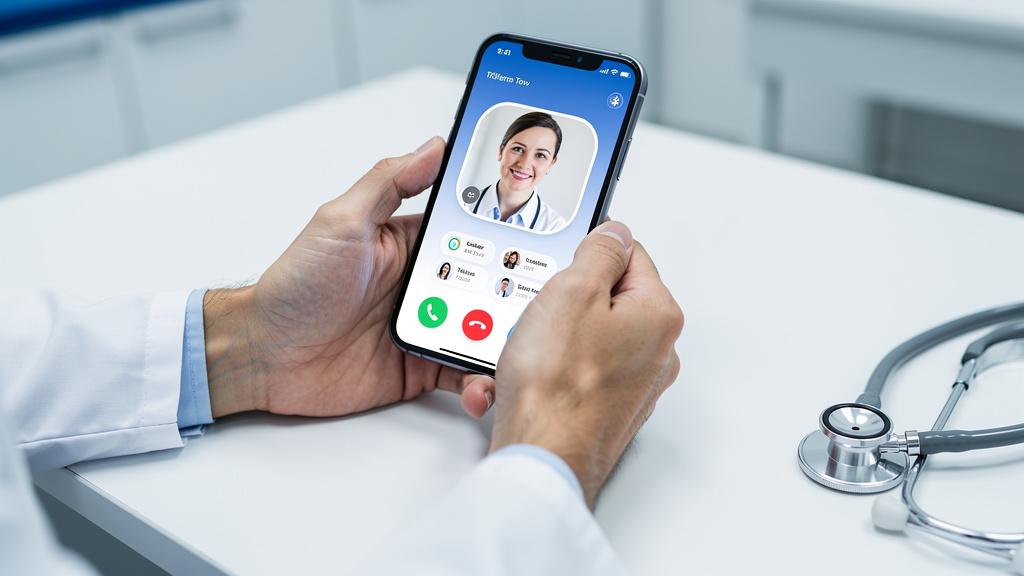
Each industry brings its own rules, data types, and user expectations. Generic apps may ship faster, but they rarely deliver strong results for long. NevoraDev adapts mobile app development services to sector‑specific needs, including:
-
Healthcare & Telemedicine – Apps for video visits, patient portals, and remote monitoring, built with HIPAA‑aligned data handling, clear consent flows, and strong identity controls.
-
Fintech & Banking – Mobile banking, lending, and wallet apps with multi‑factor authentication, fraud checks, PCI‑DSS compliance, and simple, guided flows for sensitive tasks.
-
eCommerce & Retail – Fast product browsing, personalized recommendations, secure checkout, loyalty programs, and order tracking that keep customers engaged.
-
Logistics & Supply Chain – Fleet tracking, routing, warehouse workflows, and proof‑of‑delivery features, often with offline support for field teams.
-
On‑Demand & Mobility – Ride‑hailing, delivery, and home‑service apps powered by real‑time geolocation, matching logic, and reliable payments.
-
Education & Enterprise – E‑learning platforms, virtual classrooms, and internal tools for inspections, field work, asset tracking, and analytics on the go.
Across dozens of industries, projects start with the right regulatory and security constraints in mind rather than discovering them too late.
Essential Features for Modern Mobile Apps
Users install many apps but keep only the ones that feel useful and smooth. Certain features are now expected across most categories.
Foundational capabilities often include:
-
Secure authentication and profiles
-
Geolocation and mapping
-
In‑app payments (Apple Pay, Google Pay, Stripe, PayPal)
-
Push notifications used thoughtfully, not as spam
-
In‑app messaging or support
-
Social logins and sharing
-
Multi‑device sync across phones, tablets, and wearables
-
Personalization based on behaviour and preferences
Advanced features, added when they serve clear goals, can include:
-
AI and machine learning for recommendations, chatbots, voice commands, or image recognition
-
Augmented or virtual reality for try‑on, visualization, or immersive learning
-
IoT integrations for connected homes, vehicles, or industrial equipment
-
Blockchain for tamper‑resistant records or specific payment flows
NevoraDev evaluates which capabilities add measurable value before bringing them into your roadmap.
Understanding Mobile App Development Costs and Timelines
Leaders usually ask about budget and timing first, and they are right to do so, as Mobile App Development – trends show these are critical success factors. Costs for mobile app development services depend on several factors:
-
Number of features and user roles
-
Native vs cross‑platform development
-
UI design depth and animation needs
-
Backend complexity and traffic volume
-
Third‑party integrations (payments, CRMs, analytics, etc.)
-
Compliance demands (HIPAA, PCI‑DSS, GDPR, and others)
Typical ranges:
-
Simple apps – Limited screens, light backend, few integrations: roughly $30k–$80k and 2–4 months.
-
Medium‑complexity apps – Custom UI, secure logins, APIs, and data storage: about $80k–$250k and 4–8 months.
-
Enterprise‑grade apps – Many integrations, strict compliance, advanced features: $250k+ and 8–12+ months.
NevoraDev often starts with a focused minimum viable product (MVP), then extends based on real user feedback, with clear estimates and regular cost updates at each phase.
Our Technology Stack and Advanced Capabilities
The technology stack behind an app shapes performance, security, and how easy it is to extend later. NevoraDev selects tools based on project needs rather than forcing every product into the same pattern.
Our typical stack includes:
-
Frontend & Mobile – Swift and SwiftUI or UIKit for iOS, Kotlin with Android Jetpack for Android, plus React Native or Flutter for cross‑platform apps when that fit makes sense.
-
Backend & APIs – Node.js, Python frameworks such as Django or Flask, Java with Spring Boot, .NET Core, and Ruby on Rails, often organized as microservices.
-
Data & Storage – PostgreSQL or MySQL for structured data, MongoDB or Redis for flexible workloads, and SQLite, Core Data, or Realm for on‑device storage and offline modes.
-
Cloud & DevOps – Deployments on AWS, Google Cloud Platform, or Microsoft Azure, using containers, serverless functions, and automated pipelines with GitHub Actions, Bitrise, Jenkins, Docker, and Fastlane.
-
Security & Monitoring – OAuth 2.0, OpenID Connect, JWT, biometric authentication, plus analytics via Firebase or Mixpanel and error tracking with tools such as Crashlytics and Sentry.
This mix allows NevoraDev to balance speed, stability, and long‑term maintainability.
Security and Scalability: Built-In, Not Bolted On

A single breach or serious outage can erase hard‑won trust. NevoraDev treats security and scalability as first‑class design constraints throughout our mobile app development services.
Key security practices:
-
Threat modeling during architecture design
-
Secure coding standards aligned with OWASP guidance
-
Multi‑factor and biometric authentication for sensitive apps
-
Encryption of data in transit and at rest with managed keys
-
Strict API access control, rate limiting, and input validation
-
Automated vulnerability scans, regular penetration tests, and activity monitoring
-
Alignment with HIPAA, PCI‑DSS, GDPR, SOC 2, and other standards where required
-
Tested backups and disaster‑recovery procedures
Key scalability practices:
-
Horizontal scaling with load balancers and clear service boundaries
-
Microservices where appropriate so parts of the system scale independently
-
Database indexing, read replicas, and caching to keep response times low
-
Content delivery networks (CDNs) for static assets
-
Queues for background work so users are not blocked by long‑running tasks
-
Auto‑scaling rules and continuous performance monitoring
“Security is a process, not a product.” — Bruce Schneier
NevoraDev designs apps to handle far greater loads than they see on day one.
Flexible Engagement Models For Your Business Needs
Organizations differ in internal skills, budgets, and timelines. NevoraDev offers flexible engagement models for mobile app development so collaboration fits how you already work.
-
Dedicated Team – A cross‑functional group of designers, engineers, and QA specialists focused solely on your product, joining your stand‑ups and rituals like an internal squad.
-
Fixed Price – A clearly defined scope, budget, and schedule agreed up front. Works best when requirements are stable, such as a compact MVP or a well‑specified internal tool.
-
Time & Material – Billing based on actual time spent, with scope that can shift as new insights appear. Ideal for complex integrations or products that change direction frequently.
In every model, we share progress through regular demos, reports, and tools such as Jira and Slack.
How To Choose the Right Mobile App Development Partner
Choosing a development partner may be the biggest decision you make for your app. The right team protects your budget, timeline, and user experience.
When evaluating vendors, look for:
-
Relevant Portfolio & References – Case studies similar to your project, with measurable outcomes and contacts you can speak with.
-
Technical Depth – Comfort with modern frameworks, cloud platforms, and security practices, plus the ability to explain choices in plain language.
-
Industry Experience – Familiarity with your sector’s regulations, data flows, and user roles, especially in healthcare, finance, logistics, or education.
-
End‑To‑End Capability – One team that can handle discovery, design, development, QA, deployment, and maintenance.
-
Clear Process & Communication – Agile practices, regular demos, documented decisions, and quick, honest responses to questions.
-
Long‑Term Support – A defined approach to updates, incident response, and feature growth after launch.
NevoraDev follows this full‑lifecycle model, focusing on security, scalability, and real business results rather than one‑off builds.
“Any fool can write code that a computer can understand. Good programmers write code that humans can understand.” — Martin Fowler
Conclusion
Mobile apps now sit at the center of how customers discover brands, buy products, and interact with services. Succeeding in this channel calls for more than writing code. It demands clear strategy, thoughtful design, strong engineering, reliable security, and steady improvement after launch.
This guide has covered the main decisions behind mobile app development services: choosing a development approach, understanding the lifecycle, planning for industry requirements, budgeting realistically, and treating security and scalability as baseline needs. All of these elements support one aim: turning a high‑level concept into a reliable, maintainable product that advances your business.
NevoraDev focuses on that outcome. We deliver full‑cycle services from concept through growth, use Agile sprints to show visible progress every two weeks, and design for stability and scale from the first architecture sketch. Our teams have shipped products for startups, growing companies, and enterprises across many sectors.
If you are exploring a new app idea or planning to modernize an existing one, we are ready to talk. Reach out to NevoraDev to discuss your goals, compare options, and receive a clear estimate for cost and timeline.
FAQs
Question: How Long Does It Take To Develop a Mobile App?
Timelines depend on how many features you need, which platforms you target, and how complex the backend is. A focused MVP can often be designed, built, and released in 2–4 months. Apps with more screens, custom design, and several integrations usually fall in the 4–8 month range, while large enterprise projects can take 8–12+ months. NevoraDev runs work in two‑week sprints so you see steady progress and can adjust plans as you learn.
Question: What Is the Difference Between Native and Cross-Platform Development?
Native development means building separate apps for iOS and Android using Swift and Kotlin. This approach delivers top performance, full access to device features, and interfaces that closely match each platform’s standards. Cross‑platform development with tools such as React Native or Flutter uses mostly shared code for both platforms, which can reduce cost and speed up delivery while still giving near‑native performance in many cases. NevoraDev reviews your performance needs, budget, and roadmap before recommending one approach or a mix.
Question: How Much Does It Cost To Build a Mobile App?
Costs vary widely with scope and complexity. As a rough guide, simple apps often fall between $30k–$80k, medium‑complexity products between $80k–$250k, and enterprise‑level systems above that range. Factors include design depth, number of platforms, backend and integration needs, and any regulatory requirements. NevoraDev provides detailed estimates, then breaks work into phases so you can align investment with milestones and user feedback.
Question: Do You Provide Post-Launch Support and Maintenance?
Yes. Post‑launch care is a core part of NevoraDev’s mobile app development services. After release, we monitor performance and stability, resolve incidents, keep pace with new OS versions, and apply security patches. We also review analytics and user feedback to suggest improvements and new features. Regular releases keep the app stable and useful while your team focuses on the business.
Question: How Do You Ensure Mobile App Security?
NevoraDev designs security into every layer of the app from the start. We use least‑privilege access, safe data flows, strong authentication (including multi‑factor and biometrics where appropriate), and encryption for data in transit and at rest. APIs rely on secure tokens, strict validation, and rate limiting. Automated vulnerability scans, regular audits, and penetration tests help catch issues early, and we align with standards such as HIPAA, PCI‑DSS, GDPR, and SOC 2 when needed. We also maintain tested backups and recovery procedures.
Question: Can You Integrate My App With Existing Business Systems?
Yes. Integration with existing systems is a common part of our work. NevoraDev connects mobile apps to CRM platforms such as Salesforce or HubSpot, ERP systems like SAP, Oracle, or Microsoft Dynamics, and payment providers including Stripe and PayPal. We also integrate analytics platforms, marketing tools, and internal or legacy APIs. The goal is reliable, secure data flow between your app and the rest of your stack so workflows feel seamless for both users and internal teams.
